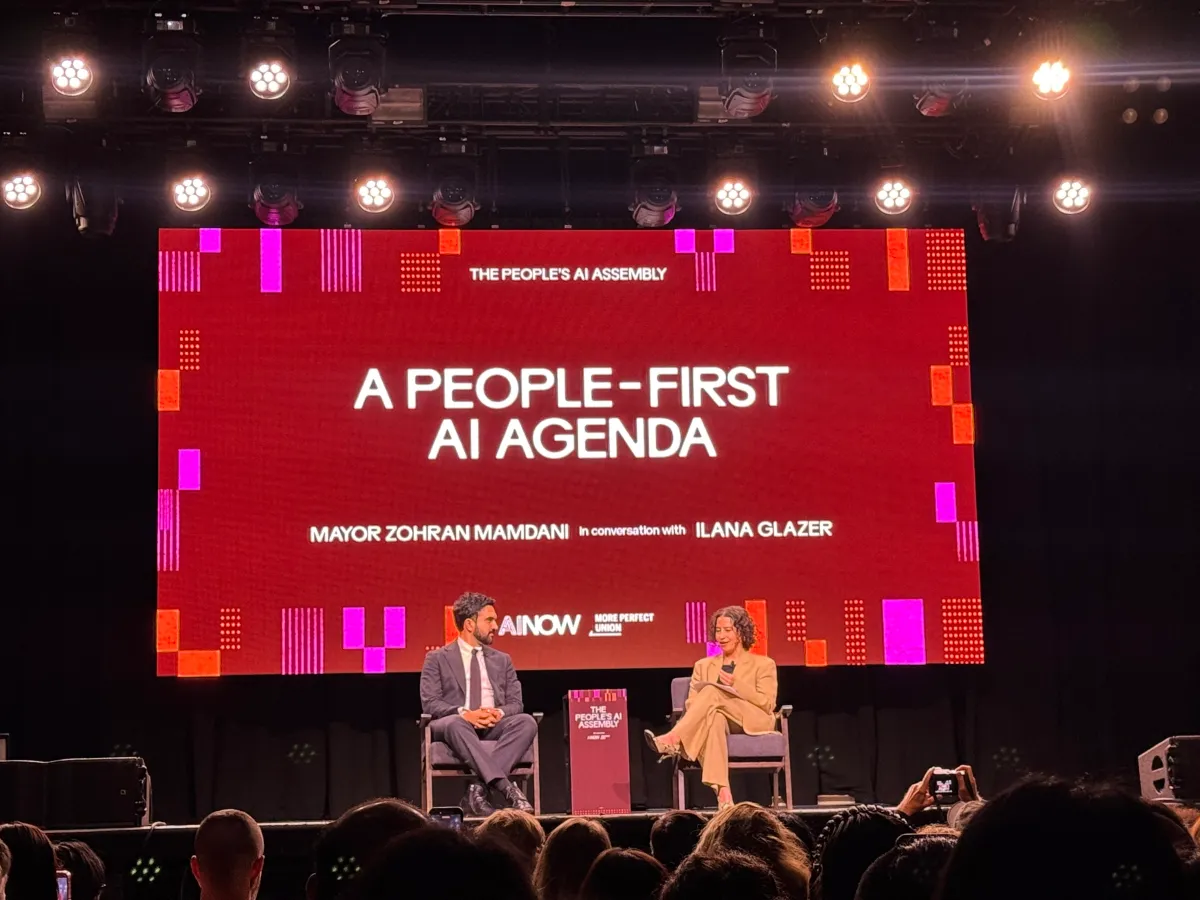
Mayor Zohran Mamdani took to the stage on Monday night in New York to urge residents to challenge the growing belief that an artificial‑intelligence takeover is inevitable. He warned that federal officials have largely stepped back from addressing the rapid expansion of AI, leaving the public to navigate an uncertain landscape without clear safeguards.
In his remarks, Mamdani urged New Yorkers to demand stronger regulations that would protect the public and restore decision‑making power to citizens. He framed the debate as a choice between passive acceptance of unchecked AI development and active civic engagement to shape the future of technology.
The mayor’s message comes amid a broader national conversation about the need for comprehensive AI policy. While the federal government has issued statements about the importance of responsible AI, critics argue that these statements lack enforceable rules and fail to address potential risks such as bias, privacy breaches, and job displacement.
Mamdani’s call to action is not just a local issue. Cities around the world are grappling with similar questions about how to balance innovation with public welfare. In the United States, several states have begun drafting AI‑specific legislation, and the Biden administration has proposed a national AI strategy that emphasizes transparency and accountability.
For Pakistan, the discussion has particular relevance. The country’s burgeoning tech ecosystem, which includes a growing number of AI startups and research institutions, is increasingly aware of the importance of regulatory frameworks that protect consumers while fostering innovation. Pakistani policymakers and industry leaders have been monitoring developments in major markets such as New York to gauge the potential impact on cross‑border data flows and intellectual property rights.
The mayor’s emphasis on public empowerment echoes concerns voiced by Pakistani civil society groups that advocate for greater transparency in the deployment of AI systems. As Pakistan seeks to position itself as a regional hub for digital technology, the need for clear, enforceable regulations that safeguard user data and promote ethical AI practices is becoming ever more pressing.
In addition to regulatory considerations, Mamdani highlighted the social implications of an unregulated AI surge. He pointed out that without robust oversight, AI could exacerbate existing inequalities and erode trust in public institutions. The mayor’s appeal is therefore not only about legal frameworks but also about maintaining democratic accountability in an age of rapid technological change.
Looking forward, the mayor’s message underscores a global trend: cities and nations are increasingly recognizing that technology governance must be a collaborative effort involving governments, industry, and the public. For Pakistan, engaging in this dialogue offers an opportunity to shape policies that reflect local values while participating in the broader international conversation about responsible AI.
In sum, Mamdani’s call for New Yorkers to push back against the inevitability narrative is a rallying cry for civic involvement and regulatory reform. The implications extend far beyond the city’s borders, resonating with tech communities in Pakistan and across the world that are navigating the delicate balance between innovation and public interest.