
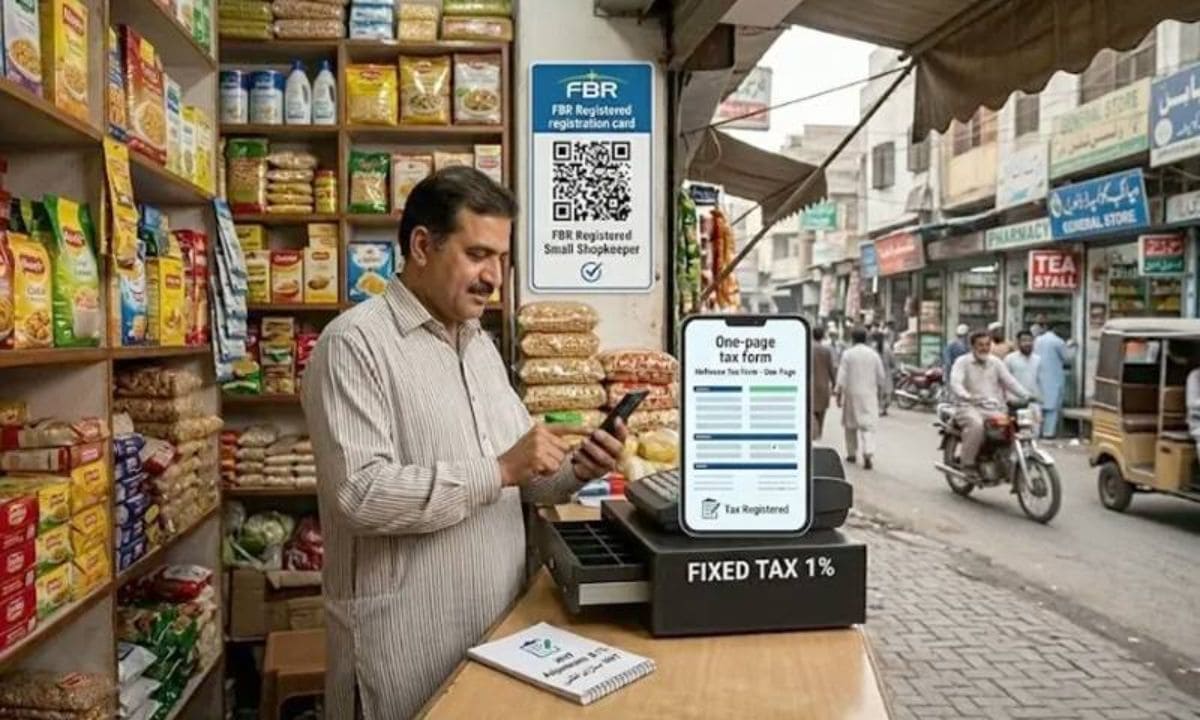
The one percent fixed tax scheme, launched for small retailers this fiscal year, is on the verge of collapse after attracting just two new taxpayers and falling more than 99 percent short of its annual revenue target.
The program was introduced as a lightweight tax mechanism aimed at bringing undocumented shopkeepers into the formal economy. By offering a single, fixed rate of one percent on turnover, the government hoped to simplify compliance and encourage informal traders to register and pay taxes.
Despite the simplicity of the structure, the uptake has been minimal. Only two new taxpayers have enrolled, a figure that underscores the limited appeal of the scheme among the intended beneficiaries. The low registration rate has translated into a modest revenue haul, with the scheme collecting only Rs26 million to date.
When compared to the projected revenue, the shortfall is staggering. The scheme has fallen more than 99 percent short of its annual revenue target, a gap that threatens the viability of the initiative. With such a significant deficit, officials are questioning whether the program can sustain itself without additional funding or policy adjustments.
The implications for Pakistan’s broader economic landscape are considerable. The informal sector accounts for a substantial share of the country’s commerce, and initiatives like this one are designed to formalize that segment. However, the current performance suggests that the scheme may not be the catalyst for formalization that was envisioned.
Experts point out that the limited success could stem from a variety of factors, including lack of awareness, skepticism about the benefits of formal registration, and the perception that a one percent tax may not be sufficient to cover the administrative costs of the program.
The government has yet to announce a definitive plan to address the shortfall. Possible measures under consideration include adjusting the tax rate, extending the registration window, or providing additional incentives for new filers.
In the meantime, the scheme’s trajectory serves as a cautionary tale for future tax initiatives targeting the informal sector. Without robust outreach and clear value propositions, even well‑intentioned policies risk failing to achieve their objectives.
The one percent fixed tax scheme’s near collapse highlights the challenges of integrating a vast informal economy into formal tax structures. As policymakers grapple with how best to support small retailers while ensuring revenue collection, the case of this scheme will likely inform the design of future economic reforms in Pakistan.