
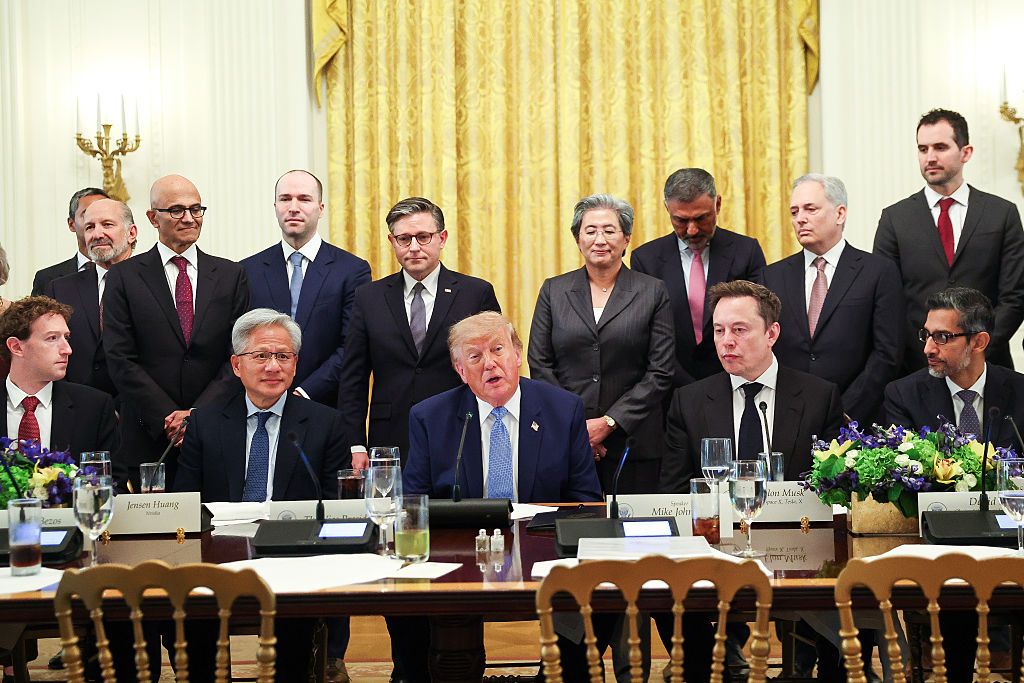
On Tuesday, President Donald Trump and a coalition of leading artificial‑intelligence executives unveiled a signed pledge known as the “Joint Commitment on Frontier Responsibilities.” The document, described as a voluntary promise, calls for the implementation of tighter controls and safety measures amid the accelerating pace of AI development. However, a seemingly minor typographical error has drawn attention: the pledge misspells the name of the United States.
The commitment, signed by Trump alongside prominent AI figures, signals a coordinated effort to address the ethical and security challenges posed by next‑generation AI systems. By agreeing to enforce stricter oversight, the signatories aim to preempt potential misuse and ensure that rapid technological progress does not outstrip regulatory frameworks.
While the pledge is rooted in U.S. policy, its implications resonate globally. Countries that are ramping up AI research and deployment—such as Pakistan—may need to reassess their own regulatory approaches. The Pakistani tech ecosystem, which has been expanding its AI capabilities across sectors like finance, healthcare, and agriculture, could find itself aligning with the standards set by this commitment.
The misspelling of “United States”—a detail that might appear trivial—underscores the importance of precision in public documents, especially those that carry legal and diplomatic weight. Critics argue that such errors could undermine confidence in the commitment’s authenticity and the seriousness with which it is pursued.
For Pakistan, the pledge presents both a challenge and an opportunity. On one hand, the emphasis on safety and control could prompt local policymakers to tighten oversight of AI applications, thereby fostering a safer environment for innovation. On the other hand, the alignment with U.S. standards may require Pakistani firms to adapt their development practices to meet stricter compliance requirements, potentially increasing costs but also raising global market credibility.
Industry analysts suggest that the pledge could catalyze a wave of international cooperation on AI governance. If Pakistan engages proactively—by participating in cross‑border dialogues, adopting best practices, and investing in ethical AI research—the country could position itself as a responsible AI hub in the region.
Ultimately, the Joint Commitment on Frontier Responsibilities represents a significant step toward global AI governance. Its success will hinge on the willingness of nations, including Pakistan, to embrace the proposed controls and collaborate on building a safer, more accountable AI future.